
UID Sarasehan #3 facilitated a dynamic, cross-sector dialogue that bridged institutional silos through a structured “World Café” methodology to transform Bali’s Net Zero Emissions 2045 vision into a cohesive, collaborative reality.
On Thursday, February 12, 2026, a cross-sector dialogue space was once again activated through UID Sarasehan #3, themed “Bali Net Zero Emissions through Energy Transition.” Held at UID Bali Campus, KEK Kura-Kura Bali, the forum brought together a diverse range of actors engaged in environmental protection, energy transition, public policy, education, and community empowerment. This sarasehan was not merely a formal meeting, but a space for exchanging ideas designed to connect perspectives, unpack systemic challenges, and identify strategic leverage points to accelerate Bali’s journey toward Net Zero Emissions by 2045. Amid the growing complexity of climate change and dependence on fossil fuels, the forum underscored a fundamental principle: energy transition can only be achieved through collective effort.
Connecting People Before Ideas
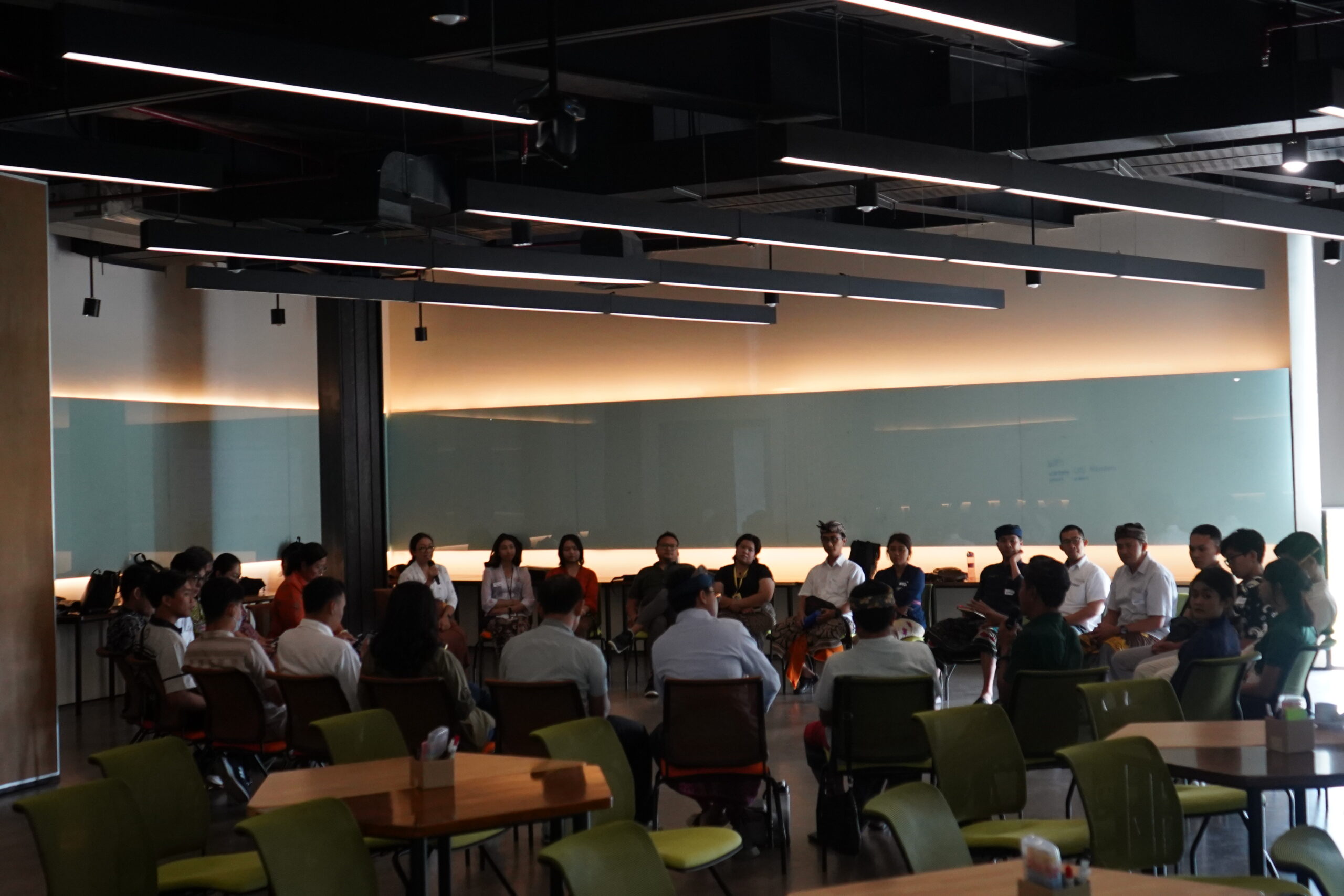
The event began with a self-introduction session. Participants represented a broad spectrum of stakeholders: environmental and energy transition foundations, government institutions such as the Environmental Agency (DLH), representatives from energy sectors including solar power plants (PLTS) and diesel power plants (PLTD), youth organizations such as Karang Taruna, GENBI members, AMDAL practitioners, as well as lecturers and teachers specializing in sustainability and energy studies.
However, the opening session was intentionally designed to be warm rather than rigid. In addition to introducing their institutional backgrounds and roles, participants were invited to answer a simple yet engaging question: what food had made them happiest that week?
Though seemingly lighthearted, this question played an important role. It broke the ice, built emotional connection, and reminded everyone that behind institutional titles were individuals with personal experiences. The conversation about Bali’s energy future thus began from a deeply human starting point, shared presence and mutual understanding.
Exchanging Perspectives in Three Rounds
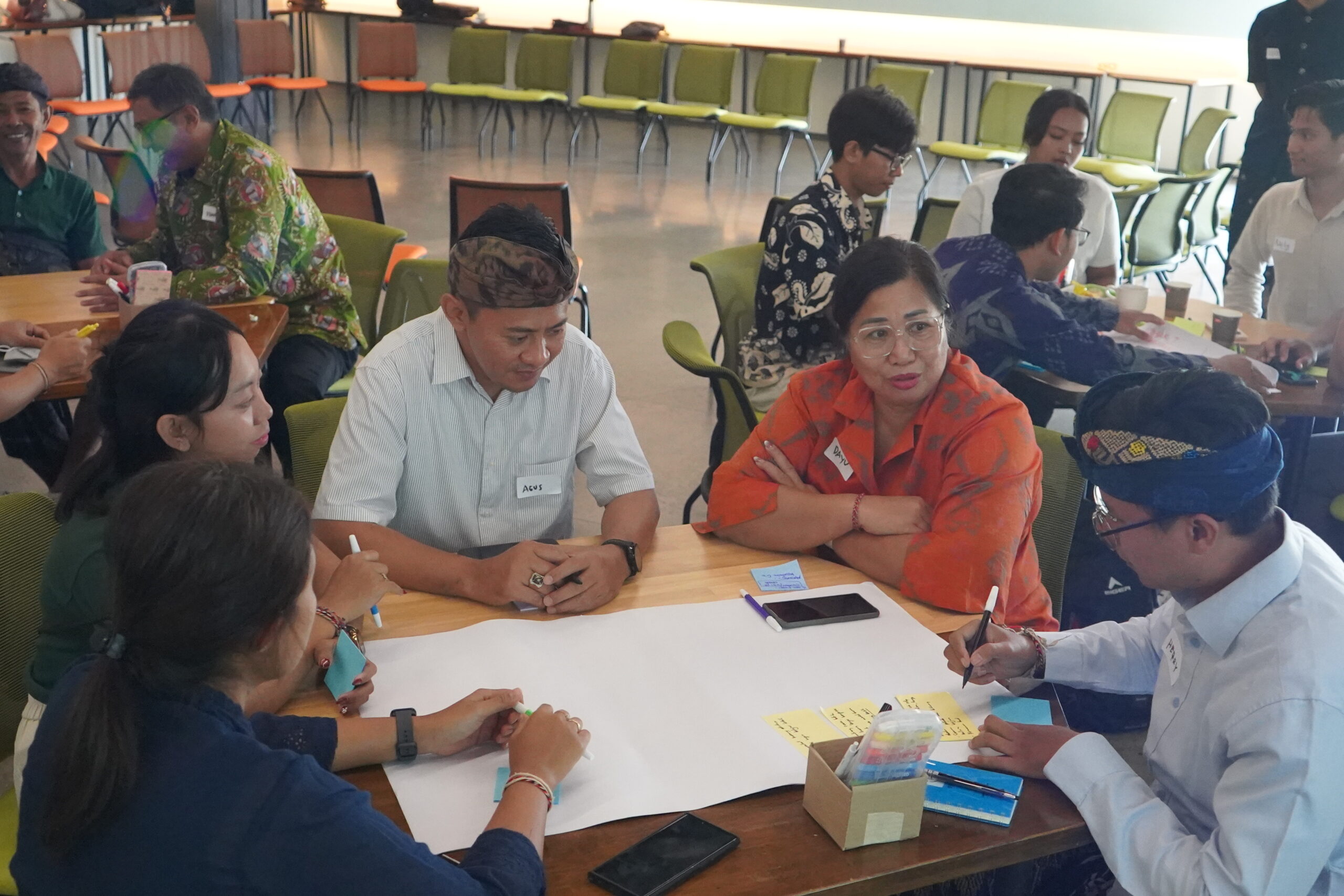
After the atmosphere was established, participants moved into small group discussions. The methodology was intentionally structured to maximize cross-sector idea exchange. One key rule applied, no participant was allowed to remain in a group with members from the same institution or community. Everyone had to separate and join individuals from different backgrounds. This ensured that discussions genuinely reflected diversity of perspectives. Approximately five groups were formed randomly. Each table appointed one “host”. The host held a crucial role, they were responsible for documenting all discussion points and were not allowed to move during the three discussion rounds. The discussions were conducted in three rounds, guided by key questions exploring. How can each sector contribute to accelerating the energy transition; Major challenges arise from differing perspectives among institutions, communities, and stakeholders. Collaborative strategies can be formulated to advance Bali Net Zero Emissions 2045.
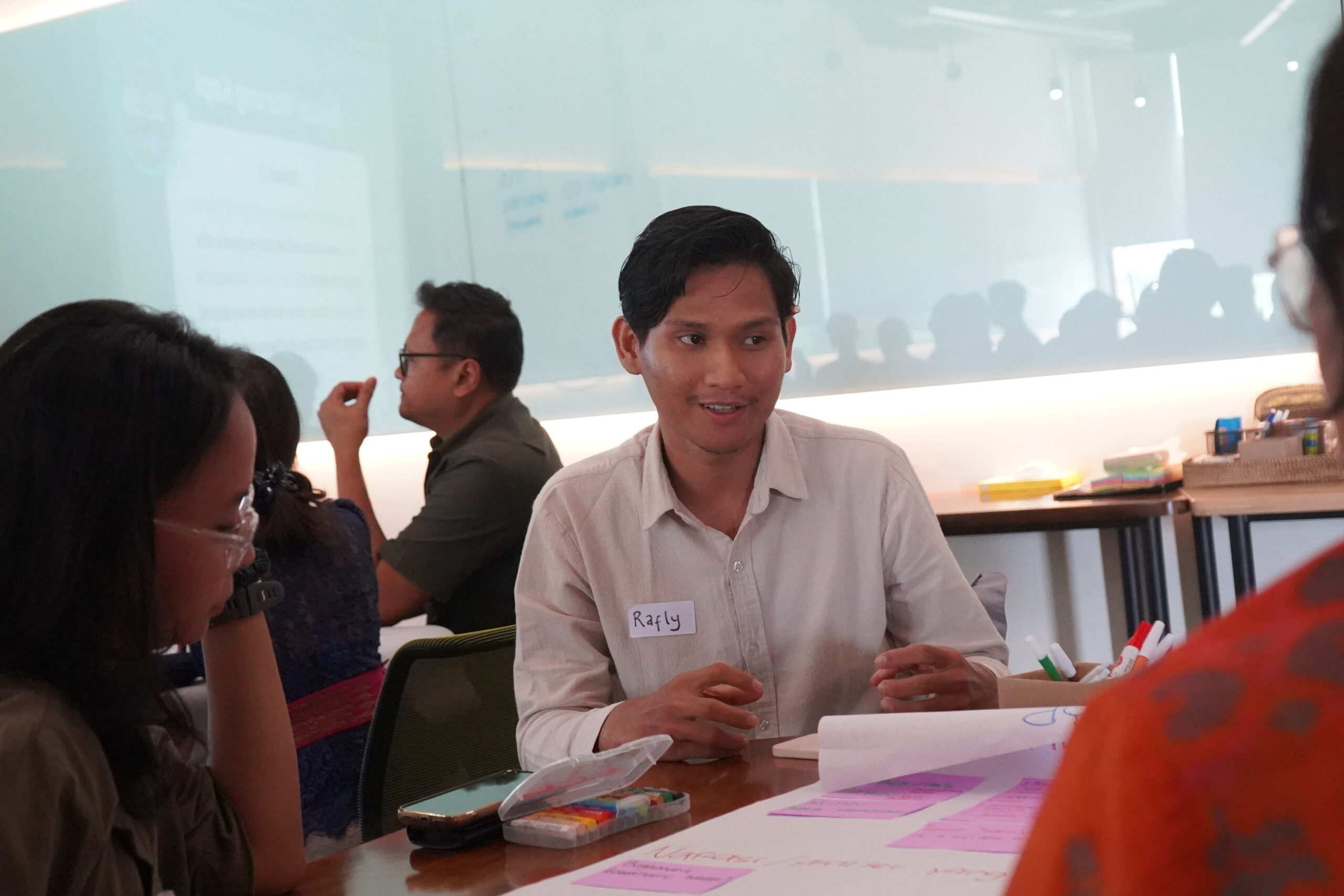
In the first round, participants tended to explain their institutional roles and existing contributions. Government representatives highlighted regulatory frameworks and policy directions. Community actors discussed grassroots initiatives. Energy sector representatives addressed technical challenges and infrastructure readiness. Academics emphasized the importance of research, data, and education. In the second round, discussions deepened into structural challenges. Differences in approaches surfaced between policy orientation and field realities. Some participants pointed to infrastructure limitations, while others underlined the lack of public literacy on renewable energy. There were reflections on the need for stronger policy alignment toward renewable energy, alongside concerns about technological readiness and financing mechanisms. By the third round, the focus shifted toward collaborative strategies. The collective spirit became increasingly visible. Ideas emerged around policy integration, community-based educational campaigns, youth empowerment, and stronger alignment between academic research and policy implementation.
The Rotation Mechanism
At the end of each round, participants rotated to different tables, while the host remained in place. The host’s task was to summarize the previous discussion and present it to the new group members before continuing the dialogue. This mechanism ensured that ideas did not remain confined within a single group. Instead, each table became a growing node of shared knowledge, enriched by new perspectives at every rotation. The process required active listening, clarity in communication, and the ability to synthesize complex viewpoints. Hosts had to capture essential ideas accurately, while rotating participants brought insights from previous discussions to their new tables. Through this structure, the forum demonstrated that energy transition is not solely a technical matter, it is equally about communication, coordination, and mutual understanding.
Strengthening Networks Beyond Formal Dialogue
After completing the three rounds, participants gathered for lunch together. This informal moment provided space for deeper connection beyond structured discussions. Conversations flowed more freely. Some participants explored possibilities for future collaboration, while others exchanged contact information and discussed follow-up initiatives. In this sense, energy transition is also built through relationships, through trust and networks formed in spaces that allow both structured dialogue and informal exchange.
Collective Reflection: Reinforcing Shared Commitment
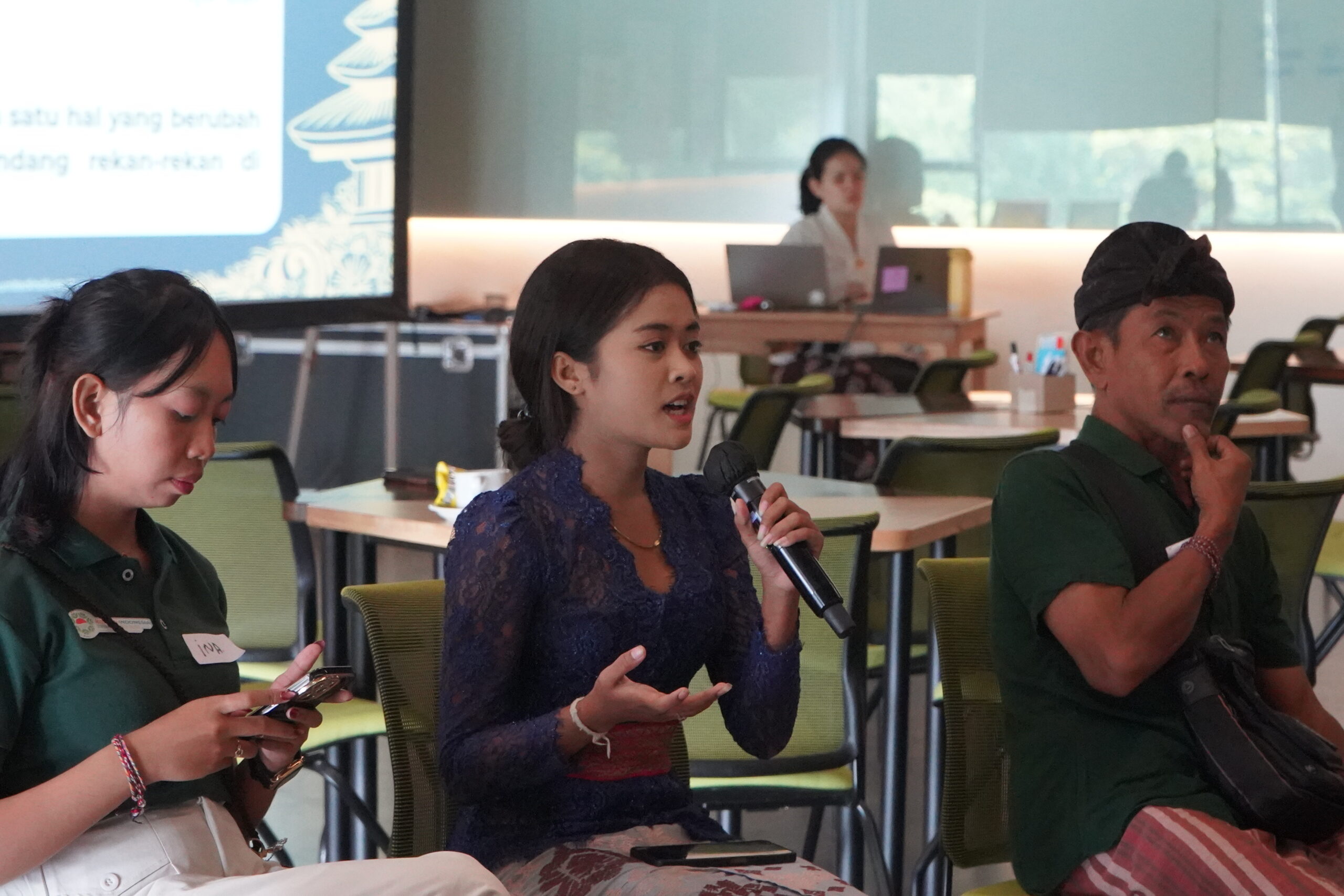
The closing session brought all participants together in a large circle. The circular format symbolized equality, no hierarchy, no central podium, and equal space for every voice. During the reflection session, participants shared insights, impressions, and commitments. A recurring theme was that energy transition is not an option but an inevitability. However, its acceleration depends heavily on active involvement from all sectors.
Key reflections included:
- The importance of public education to raise awareness about emission reduction.
- The need for policy consistency to ensure long-term sustainability beyond political cycles.
- Strengthening the role of communities and youth as local change agents.
- Integrating academic research more effectively into policy and implementation.
One of the strongest reflections emphasized that achieving Bali Net Zero Emissions 2045 requires sustained commitment and consistency among government institutions, organizations, communities, and society at large. Without long-term alignment and collaboration, the vision risks remaining rhetorical rather than actionable. The forum reaffirmed that collaboration is not instantaneous, it requires dialogue, trust-building, and openness to diverse perspectives.
Looking Toward 2045
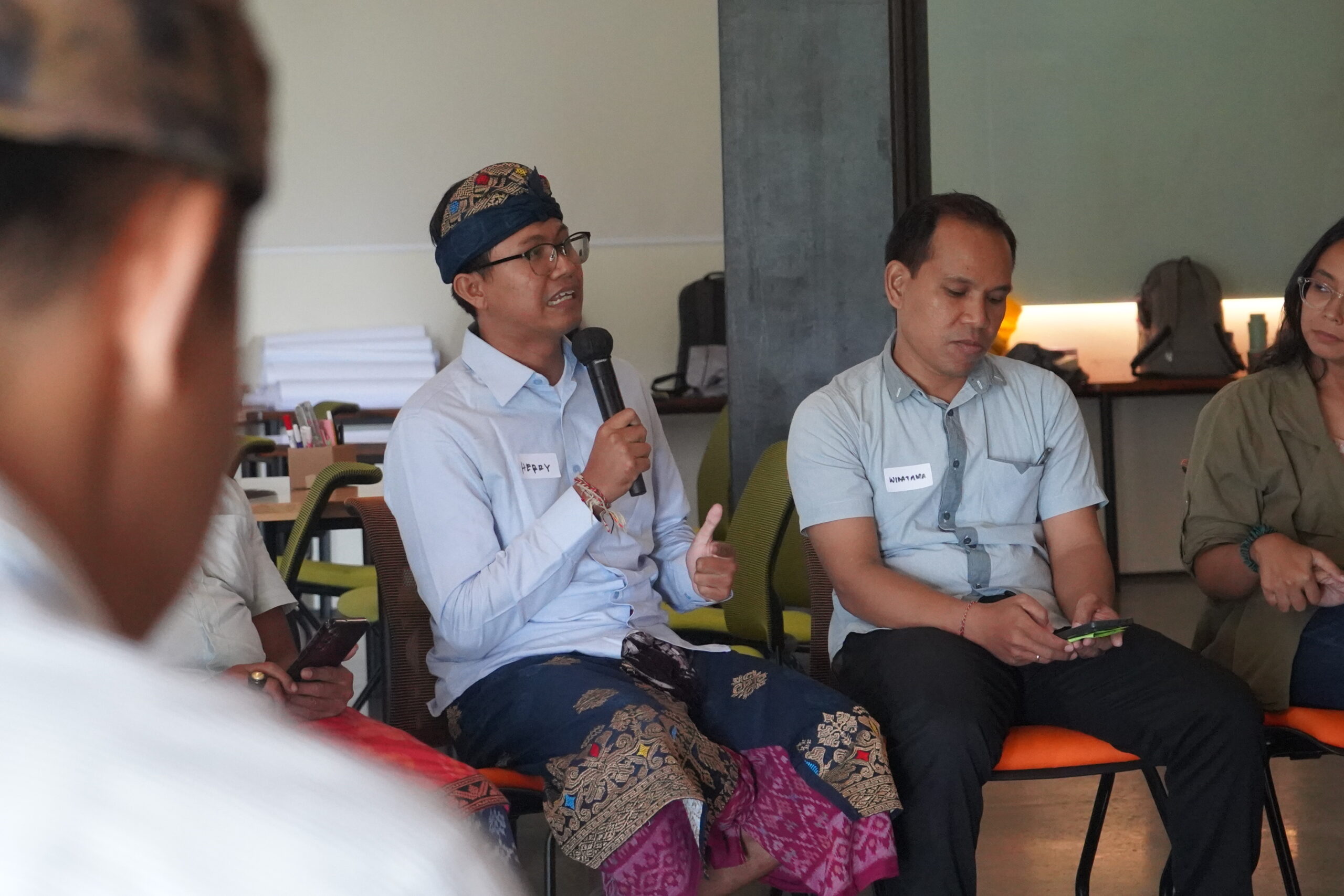
As a globally recognized destination, Bali carries both moral and ecological responsibility to demonstrate leadership in sustainability. Energy transition is not only about reducing emissions but also about building an energy system that is equitable, inclusive, and resilient. UID Sarasehan #3 represents one meaningful step in that long journey. It created space for mutual understanding, strategic thinking, and network strengthening. Amid global challenges such as climate change and energy crises, forums like this reinforce a vital lesson, solutions do not emerge from a single sector. They grow from synergy.
A Symbol of Collective Commitment
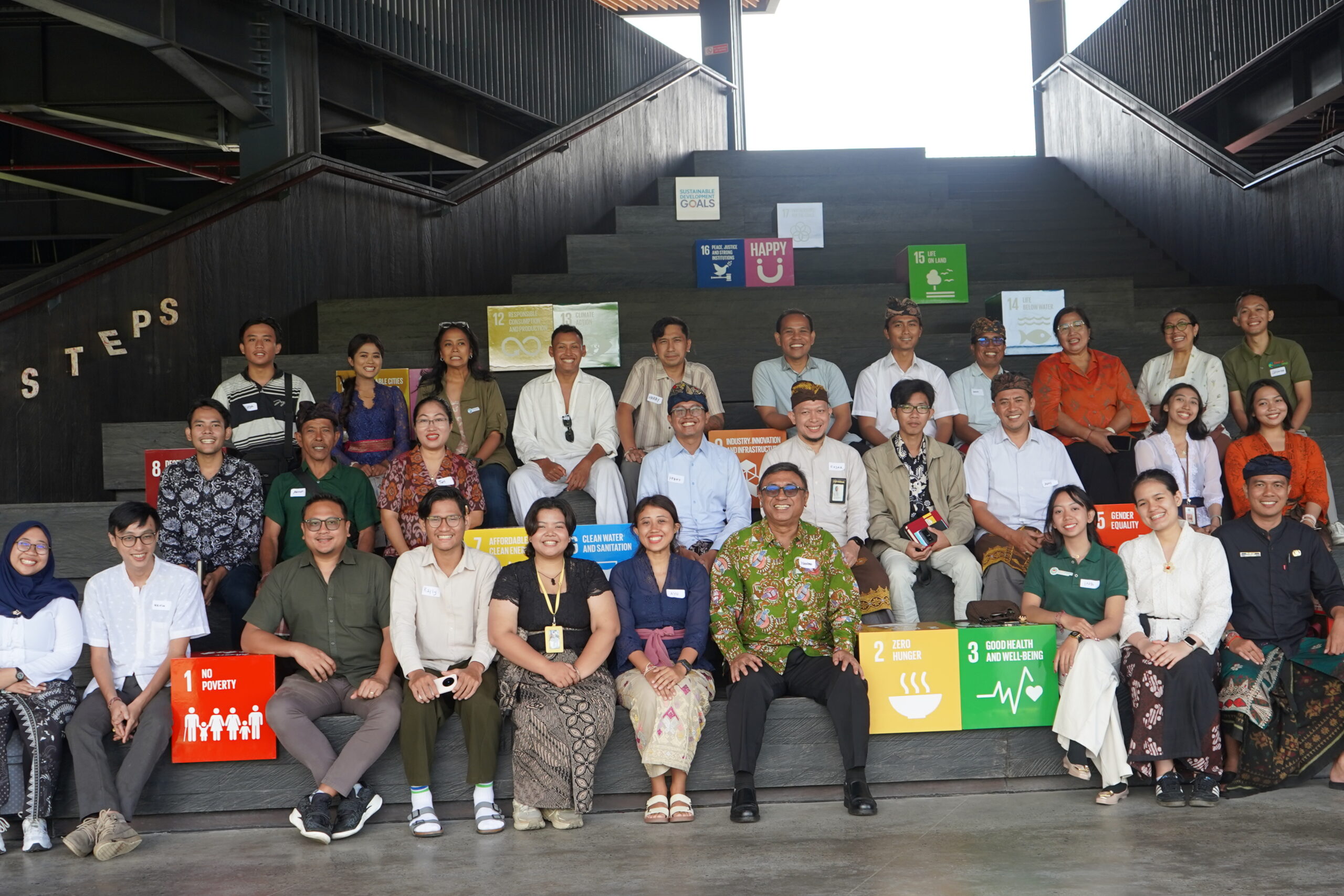
The event concluded with a group photo session. More than documentation, this moment symbolized the collective commitment formed throughout the day. Behind the shared smiles lay a shared vision, that the discussions would not end in that room, but would translate into tangible actions toward a Bali free from carbon emissions by 2045. UID Sarasehan #3 demonstrated that when sectors sit together, listen deeply, and design strategies collaboratively, energy transition becomes not a distant aspiration, but an ongoing process. The journey toward Bali Net Zero Emissions 2045 may be long. Yet through sustained dialogue, consistent commitment, and continuous collaboration, a clean, just, and sustainable energy future for Bali becomes increasingly attainable.
Article Contributor: Komang Cantika Mahadewi Tanaya