
The energy pyramid serves as a vital framework for Indonesia’s energy transition by prioritizing energy conservation and efficiency as the essential foundations before integrating renewable energy sources.
With rising global temperatures and energy prices, the sustainability of the fossil fuel energy system is increasingly being questioned. Extreme heat waves, prolonged droughts, and massive floods worldwide indicate that climate change has entered a much more serious phase. At the same time, dependence on coal, oil, and gas makes many countries vulnerable to geopolitical turmoil and supply shortages. Rising energy prices directly impact electricity tariffs, transportation costs, and even the price of basic foodstuffs. This situation demonstrates that the current energy system is neither ecologically nor economically resilient.
The World Energy Transitions Outlook report states that to keep global temperature rise below 1.5°C, the world must simultaneously accelerate energy efficiency and expand renewable energy. This means that while developing clean energy sources from alternative sources such as solar and wind power is crucial, these sources cannot stand alone. Without controlling our energy consumption behavior, renewable energy development will never be sufficient to keep up with the high demand. Therefore, the world needs not only cleaner energy but also a more prudent and controlled energy use system.
Therefore, the energy pyramid concept is crucial as a foundation for achieving the energy transition and zero-emission goals in Indonesia. The energy pyramid concept emphasizes that the energy transition must begin with a solid foundation, starting with energy conservation, followed by energy efficiency, and finally, renewable energy development. Without this strong foundation, energy renewal risks being ineffective, expensive, and even suboptimal.
Basic Concept of Energy Pyramid
The Energy Pyramid consists of three main layers:

- Energy Conservation
- Energy Efficiency
- Renewable Energy
This pyramid, arranged in a cone shape, with renewable energy at its highest point, not only represents a conceptual division but also reflects energy policy priorities. The International Energy Agency (IEA) states that “energy efficiency is the first fuel” in the global energy transition. This statement suggests that before adding new energy sources, the most strategic step is to reduce and manage existing energy consumption. The principle is simple: unused energy is the cheapest and cleanest. By preventing energy demand in the first place, the need for new renewable energy infrastructure can be significantly reduced.
The energy conservation pyramid, as a basic foundation, emphasizes behavioral changes that can be made to reduce energy waste. Once these saving behaviors are achieved, we can then move on to energy efficiency through technology such as energy-efficient appliances and energy management systems strengthening this foundation to optimize and control energy consumption.
Then, renewable energy sits at the top of the pyramid because its success is highly dependent on the two foundations below it. The World Energy Transitions Outlook states that the pathway to 1.5°C requires accelerated renewable energy development “in parallel with rapid improvements in energy efficiency”. This means that the development of renewable energy sources such as solar, wind, and other clean sources cannot stand alone. Without conservation and efficiency, the expansion of clean energy capacity will continue to lag behind the growth in energy demand. This is why the sequence of the Energy Pyramid is crucial, ensuring the foundations are strengthened before reaching the top.
Why Can’t We Go Straight to the Top?
This can be explained through a simple yet powerful analogy a “leaky bucket”.
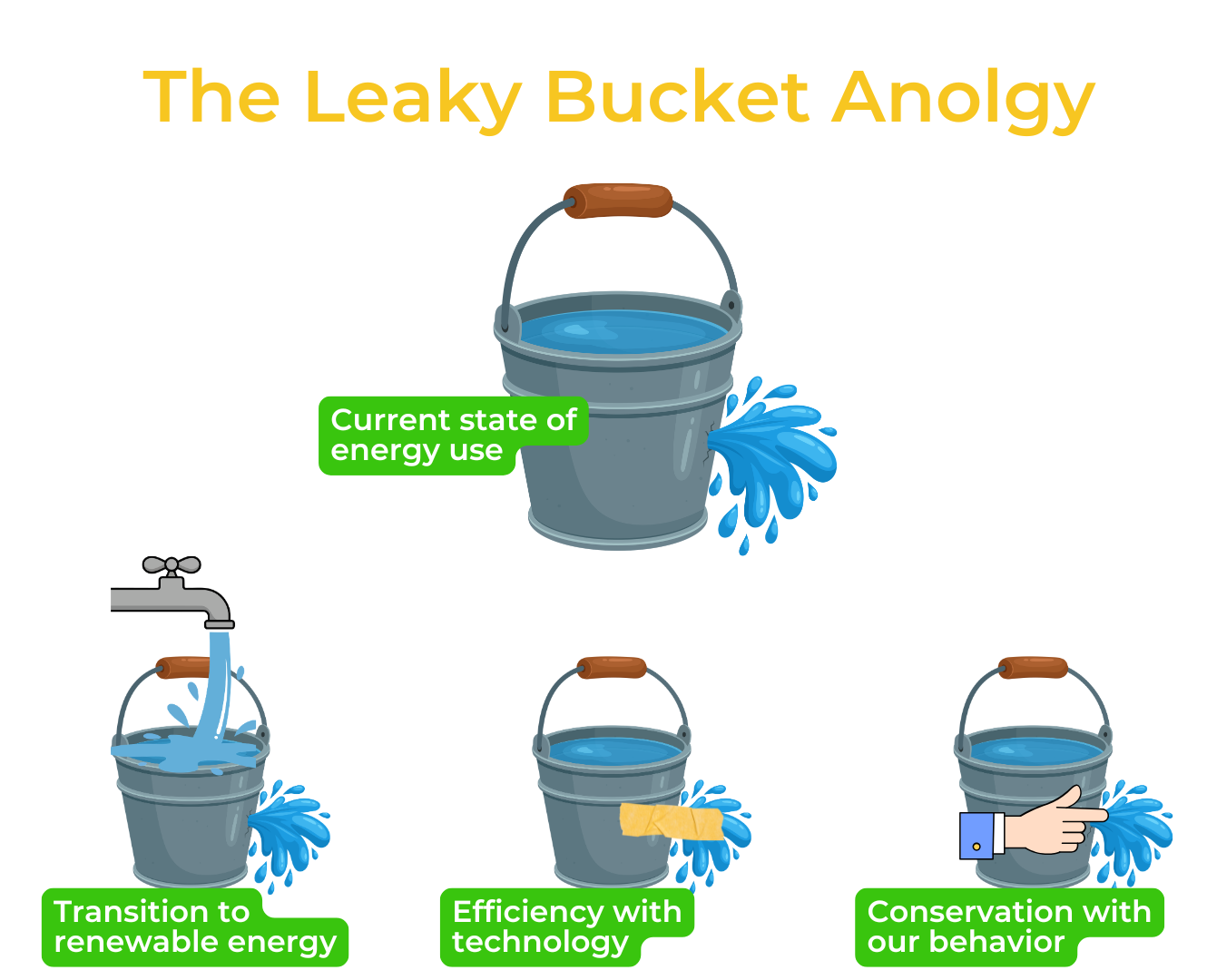
As seen in the image, we imagine the national energy system as a bucket. The water inside represents our energy, while the leaks are the result of our wasteful energy consumption.
If the bucket has a hole, no matter how much water we add, it won’t fill it, and water will continue to be wasted. In the energy context, building more power plants including renewable energy will not be optimal if consumption remains high and inefficient.
In this analogy:
- Energy conservation is like covering a hole with our hand, meaning we reduce waste from our daily behavior.
- Energy efficiency is like covering existing gaps with plaster, meaning we reduce energy waste with more efficient and less energy-consuming tools.
- Renewable energy is like clean water poured into a bucket that comes from alternative energy sources.
This is supported by the International Energy Analysis (2023), which states that the rate of global energy efficiency improvements needs to double to stay on track with international climate targets. Without this, investment in renewable energy will continue to be driven by uncontrolled and never-ending energy demand.
This analogy demonstrates that building a foundation is far more important than simply expanding energy production capacity.
Energy Conservation as Indonesia’s Strategic Foundation
In Indonesia, energy conservation is regulated by Energy Law Number 30 of 2007. The government aims to gradually reduce energy consumption as part of a sustainable development strategy .
Energy conservation isn’t just about saving electricity at home. It’s a national strategy to:
- Reduce the burden of energy subsidies,
- Reduce fuel imports,
- Reduce carbon emissions,
- Increase national energy security.
The Directorate General of Energi Baru, Terbarukan, dan Konservasi Energi (EBTKE) stated that energy conservation policies contribute to national emissions reductions. This demonstrates that small steps taken to reduce energy consumption can have a significant impact on achieving Nationally Determined Contribution (NDC) targets.
Examples of energy-saving measures that can be implemented:
- Using public transportation, cycling, or walking.
- Using natural light in the afternoon.
- Adjusting the air conditioning temperature wisely.
- Turning off electronic devices when not in use.
If done regularly, these steps can significantly reduce the system’s energy load.
Energy Efficiency: The Cheapest and Fastest Strategy
Once energy-saving behaviors are implemented, the next step is energy efficiency. The Energy Efficiency Report 2023 states that energy efficiency is the “first fuel” in the energy transition due to its rapid, cost-effective, and immediate benefits. Energy efficiency helps reduce costs and emissions from the use of these devices.
In the building sector, energy consumption is relatively high, especially for heating and lighting. Implementing green building design, switching to LED lighting, implementing inverter cooling systems, and implementing energy efficiency measures can significantly reduce consumption. Furthermore, in the industrial sector, energy consumption can be reduced through optimal equipment maintenance and the adoption of effective technologies. These steps demonstrate that energy efficiency is not just an option but part of national policy.
Furthermore, at the smallest level, within each family, we can try the following simple steps:
- Replacing incandescent bulbs with LEDs.
- Using electronic devices labeled energy-efficient.
- Adjusting the refrigerator or freezer to the optimal temperature setting.
- Regularly cleaning and maintaining electronic devices.
- Using induction hobs.
This is supported by IRENA report, which emphasizes that without increased energy efficiency, the need for global investment in renewable energy will increase dramatically. In other words, efficiency is not an add-on, but rather a crucial prerequisite for successful transformation, and therefore, both large and small sectors must play an active role in supporting this success.
Renewable Energy: Peaks Relying on a Strong Foundation
Indonesia, with its abundant natural resources, has enormous renewable energy potential, including solar, wind, biomass, and geothermal energy. However, their utilization is still not optimal compared to the available technical potential.
However, before discussing renewable energy development in Indonesia further, it is important to understand that renewable energy is crucial for reducing carbon emissions and achieving the 2060 Net Zero Emissions target. However, without conservation and efficiency, the expansion of clean energy capacity will continue to lag behind high energy demand, resulting in insufficient renewable energy development.
Furthermore, by 2023, global investment is estimated to reach US$5.7 trillion per year through 2030 to achieve the 1.5°C pathway. This investment is substantial and will only be effective if accompanied by policies to control energy demand.
In other words, renewable energy is a long-term solution, but its foundation still lies in managing energy consumption.
Energy Transition is a Systemic Change
The energy transition isn’t just about replacing coal-fired power plants with solar panels. It involves systemic change encompassing policies, behaviors, technology, and governance. The IEA states that strong government energy efficiency policies can reduce demand for fossil fuels in the short term. This means that what we use every day has a far greater impact on global energy prices and markets than simply relying on production reductions.
- At the household level, energy savings lower electricity bills.
- At the industrial level, energy efficiency increases competitiveness.
- At the national level, energy savings strengthen energy security.
- At the global level, reduced consumption helps mitigate climate change.
All of these layers are interconnected and interrelated.
The Role of Education and the Young Generation
Energy education plays a crucial role in raising public awareness about energy waste. Therefore, as the younger generation, students, as intellectuals, have a role to play in strengthening the foundation of the Energy Pyramid by:
- Contributing to the dissemination of knowledge.
- Adopting an energy-efficient lifestyle.
- Participating in discussions on energy policy.
- Developing research on renewable energy and efficiency.
The energy transition depends not only on the government but also on changes in society’s culture. This what we do in AVIRAMA Foundation through PowerSave Project.
Strengthening Today’s Foundation for the Future
The Energy Pyramid concept teaches that major changes don’t start at the top, but rather require strengthening the foundation before reaching the summit. This begins with a solid foundation.
- Energy conservation is the first step in changing our behavior.
- Energy efficiency strengthens the system, aided by more efficient tools.
- Renewable energy becomes an effective peak when the previous two stages have been implemented.
The leaky bucket analogy above makes it clear that patching leaks is more important than simply increasing supply, because if we continue to waste energy, there will never be enough. Therefore, although Indonesia has great potential in clean energy, its success in achieving Net Zero Emissions by 2060 depends heavily on how strong the foundation is currently built.
Therefore, the energy transition is not simply a power plant construction project, but rather a shift in how we use energy more wisely and responsibly.
Article Contributor: Putu Ayu Nadya Paramitha