
By leveraging digital communication as a bridge between technical climate data and local Balinese wisdom, we can transform complex environmental science into relatable storytelling that mobilizes the community toward meaningful climate action.
Climate change is no longer just a computer prediction in a research lab or a complex graph in an IPCC (Intergovernmental Panel on Climate Change) report. For those of us living on the northern coast of Bali, this change is tangible: erratic weather patterns, rising sea levels, and the degradation of marine ecosystems in Lovina. However, the greatest challenge often lies not in a lack of data, but in a communication gap.
Science is frequently perceived as “heavy,” overly technical, and detached from daily reality. This is where Science Communication plays a crucial role. It is not merely about translating scientific jargon into layman’s terms; it is about building an emotional bridge so that society feels a sense of ownership over the problem and is moved to become part of the solution. As a non for profit organization working on environmental issues, we realize that spatial data and climate vulnerability maps mean nothing if they cannot move the hearts of those who read them.
In the digital era, the face of science communication has transformed entirely. Where environmental information was once limited to newspapers or formal news broadcasts, smartphone screens are now the frontline of climate education. In the communication team at AVIRAMA Foundation, we have come to realize that a 60-second Instagram video is often more effective at sparking discussion than a 50-page PDF document.
Digital communication for climate change awareness allows us to achieve three primary goals:
- Visualizing Impact: Directly showing field conditions through honest documentation.
- Personalizing Narratives: Transforming global statistics into local stories relevant to the culture of Buleleng.
- Real-Time Action: Mobilizing the masses to participate in environmental programs within hours through targeted posts.
Many assume the role of the documentation team is simply to “take good pictures.” However, in the context of environmental activism, documentation is evidence and inspiration. When we head into the field, our camera is not just a recording device, it is an advocacy tool capturing the socio-geographic realities of our community.
Learning from the Grassroots in the Kulkul Posyandu and PKK Movements
One of the most memorable experiences was documenting community clean-up activities involving local wisdom, such as the Kulkul Movement. Here, science communication meets rural sociology. As the head of documentation, our challenge was to capture the essence of “gotong royong” (mutual cooperation) which is deeply ingrained in our culture and direct it toward modern environmental issues.
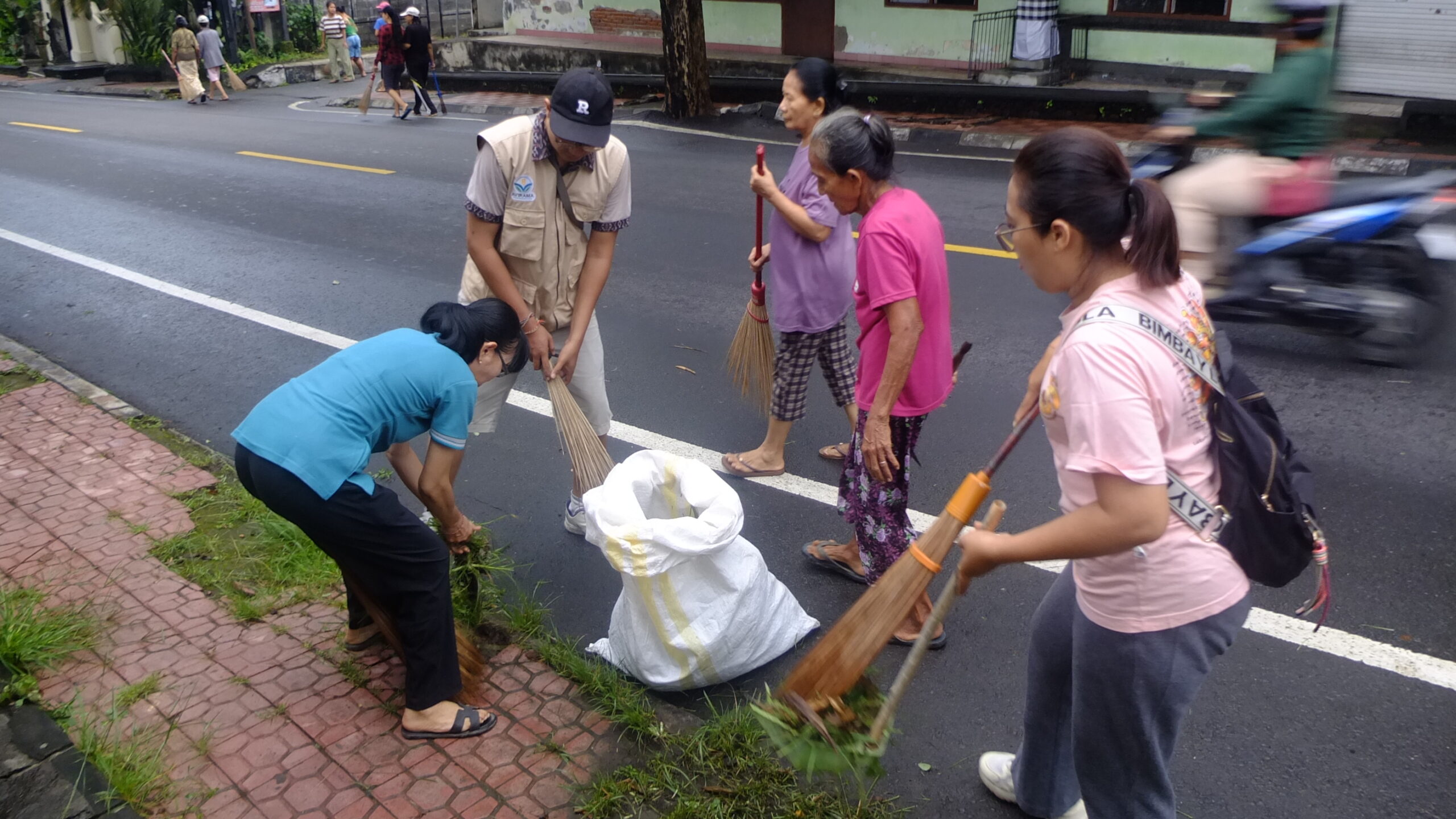
When we record the women of the PKK or Posyandu volunteers enthusiastically cleaning up waste, the message we want to convey through digital content is not just about “cleanliness,” but about community resilience. Through the editing process, we highlight how traditional Balinese values can walk hand-in-hand with modern sustainability principles. These videos are vital to show that saving the planet is not just the job of scientists, but a collective duty starting from the Banjar (neighborhood) level.
Energy Conservation and Efficiency Literacy in Schools
At SMAN Bali Mandara, our task became more specific, communicating energy conservation and efficiency. Through the Power Save Project, the challenge was making concepts like “energy audits” or “electricity conservation” engaging for Gen-Z.
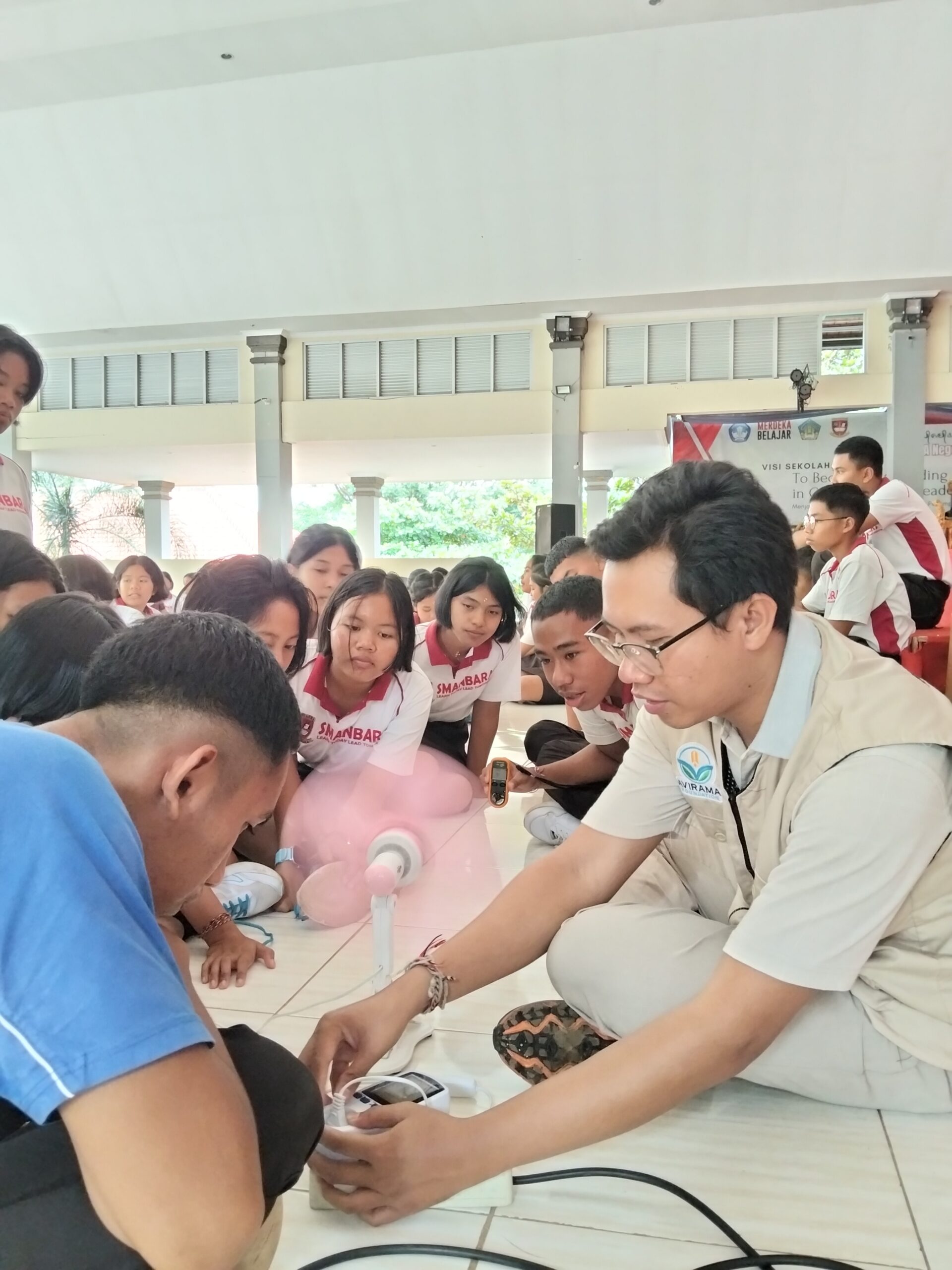
In this project, we didn’t just take photos, we crafted a narrative on how small behavioral changes correlate directly to reducing carbon emissions. By capturing the “Eureka!” moments of students as they learned to use energy measuring tools, we created dynamic storytelling. As a result, the audience didn’t just see a school activity, they received practical tutorials on how to save energy in their own homes.
In our daily life at the AVIRAMA Foundation, technology is our best ally. To bridge rigid scientific data into “digestible” content, we rely on two main tools, CapCut and Canva.
As a 4th-semester Geography student at Undiksha, our Communication Intern academic background provides a unique perspective. Geography teaches us about the interaction between humans and their environment. We use this knowledge to strategize content.
For example, when documenting waste issues in Buleleng, We don’t just see a pile of trash as a visual object. We viewed it as a result of spatial patterns and human behavior. In our posts, we often weave in geographic perspectives, such as the impact of waste on coastal ecosystems or how topography affects waste runoff. This is a form of Geography-based Science Communication.
Our experience at the AVIRAMA Foundation has proven that communication is the heartbeat of every environmental movement. Without effective communication, even the most brilliant movement will struggle to reach the wider public. Documentation, editing, and publication are not mere administrative tasks they are integral parts of science itself.
As both a Geography student and a digital communication practitioner, we see that the future of nature conservation, especially in Bali, depends heavily on our ability to tell success stories from the field. From the shores of Lovina to the classrooms in Singaraja, every clip we edit and every photo we upload is one step closer to better climate awareness.
Let’s keep documenting, editing, and sharing real action. Because behind our camera lenses, there is a future for the Earth that we are fighting for.
Article Contributor: Made Risna Epriliana Pande