
Lovina Beach faces pressing environmental challenges from seasonal marine debris and unregulated dolphin watching, requiring systemic governance, multi-stakeholder collaboration, and long-term community stewardship to protect its coastal ecosystem.
The Current State of Lovina Beach Marine Tourism
Lovina Beach, located along the scenic northern coast of Bali, is internationally celebrated for its early-morning dolphin watching tours and colorful snorkeling spots. Since May 1989, local marine tourism around Lovina Beach has been managed by Cari Keselamatan Bahari Singaraja (CKBS), a community-based organization that established internal regulations, sanctions, and environmental contributions.
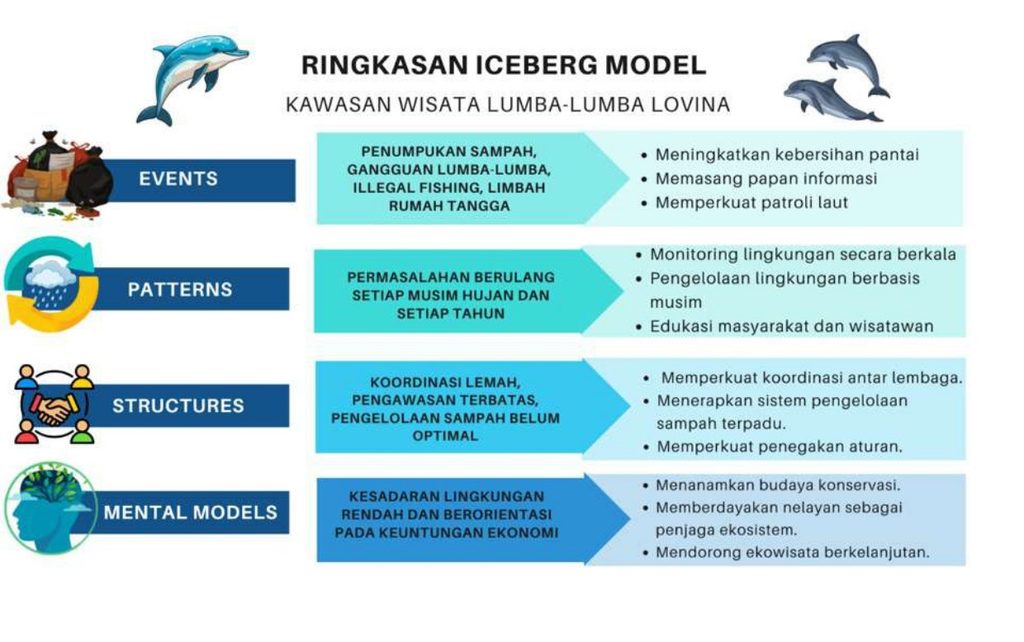
Despite decades of local governance, this beach faces persistent environmental pressures, ranging from seasonal waste accumulation to coral reef degradation and concerns over sustainable wildlife interactions. Based on an interview with Pak Ketut Merta, Chairman of CKBS, conducted on 7 July 2026, here we applies an Iceberg Analysis framework to unpack the visible events, recurring patterns, structural root causes, and deep-seated mental models shaping environmental sustainability at Lovina Beach.
Visible Environmental Challenges at Lovina Beach
At the surface level of the iceberg, several visible events occur daily along Lovina Beach. Large volumes of seasonal marine debris accumulate along the shoreline, particularly during January and February, while water turbidity and waste contamination frequently force the cancellation or suspension of snorkeling tours. Furthermore, boat operators often approach spinner dolphins closer than the regulated 15-meter safety buffer, and unlawful ornamental fish capture continues under the cover of darkness within conservation areas. These issues are compounded by language barriers between non-English-speaking local fishers and foreign visitors, which create operational misunderstandings. In response, CKBS members deploy reactive measures such as organizing beach cleanups every two days, enforcing distance rules on the spot, and canceling water activities when conditions worsen. Proposed immediate solutions include scaling up cleanup operations during peak waste months, installing multilingual rule signage at embarkation points, providing bilingual briefing cards for tour operators, and deploying rapid-response nighttime patrols.
Recurring Trends Impacting Lovina Beach Over Time
Digging beneath immediate events reveals distinct recurring trends that affect Lovina Beach year after year. Marine waste peaks consistently during the rainy season (January–February), driven by river discharges across Bali and neighboring Java. Additionally, tourist boat visits to Lovina Beach decline in the wet season due to temporary dolphin relocation, which visitors often misinterpret as population loss. The ongoing capture of ornamental fish indicates that traditional enforcement at Lovina Beach remains insufficient, while household wastewater continues to flow directly into the marine ecosystem without adequate filtration. To address these trends, medium-term solutions must be established, including cross-regional waste early-warning networks, seasonal tourism calendars that redistribute visitor flow away from peak waste months, citizen-science tracking for dolphin migration, and annual enforcement cycles aligned with fish breeding seasons.
Governance Systems Shaping Lovina Beach Operations
Systemic structures and institutional rules strongly dictate behaviors at Lovina Beach. CKBS operates as a legally registered entity with sanctions such as one-month boat suspensions for pricing or capacity violations though its focus remains primarily on economic compliance rather than ecological monitoring. While the Pokmaswas (Community Fisheries Monitoring Group) holds formal authority over sea surveillance, nighttime enforcement gaps permit ongoing illegal fishing around Lovina Beach. Governance is further complicated because Desa Adat Kalibukbuk governs coastal land, creating a split between terrestrial and marine management at Lovina Beach. These jurisdictional splits are exacerbated by frequent violations of the mandatory 100-meter coastal building setback and an absence of on-site waste sorting at the beach, meaning all collected debris goes straight to landfills without recycling. Structural solutions require multi-stakeholder negotiations to align CKBS, Pokmaswas, Desa Adat Kalibukbuk, and provincial authorities, alongside creating a dedicated regional tourism conservation fund, mandating pre-trip eco-briefings, establishing beach-level waste sorting stations, and enforcing building setbacks through community monitoring.
Underlying Beliefs Influencing Lovina Beach Sustainability
At the deepest level of the iceberg lie the core assumptions and mindsets that drive behaviors across Lovina Beach. A widespread assumption exists that the ocean is a self-cleaning system where marine waste will naturally disperse or disappear over time. This mindset fosters a diffusion of responsibility that frames marine debris at Lovina Beach as “waste from elsewhere” rather than a shared regional problem requiring local ownership. Furthermore, local tourism models frequently equate higher visitor numbers with success while overlooking ecological risks from boat overcrowding and acoustic disturbance to dolphins. An identity divide also persists, viewing local fishers solely as economic actors rather than primary ecological stewards of Lovina Beach. Transforming these mental models requires long-term educational and cultural reframing, including embedding marine stewardship into the professional identity of local fishers, developing community storytelling programs about waste origins, utilizing participatory eco-tourism tools, and reframing dolphin watching as a conservation privilege rather than a commercial entitlement.
Transforming the Future of Lovina Beach
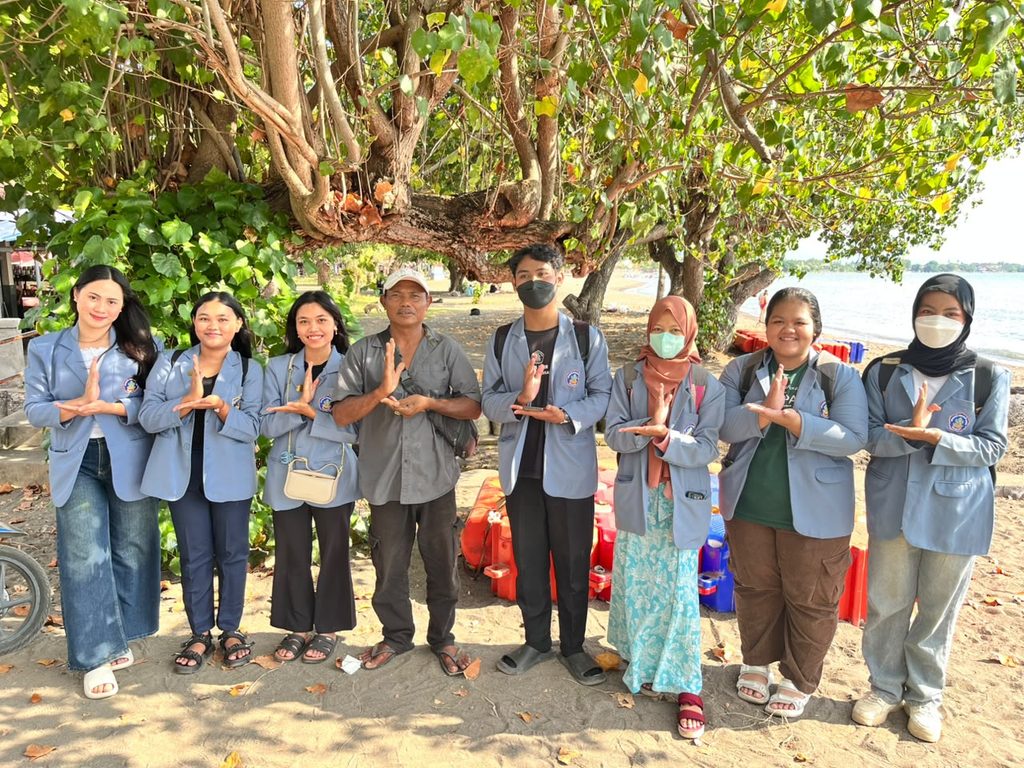
Over three decades, CKBS has built a solid foundation for managing marine tourism at Lovina Beach. However, protecting the delicate marine ecosystem of Lovina Beach against growing tourism pressure and climate variability demands a shift from reactive cleanups toward systemic transformation. By bridging governance gaps, instituting beach-level recycling, and empowering local fishers as environmental guardians, Lovina Beach can balance tourism development with conservation, ensuring that its vibrant coral reefs and spinner dolphins remain protected for generations to come.
Article Contributor: Sintal Lestari Harefa, Feri Maulana Rohman, Agnes Primsa Br Tarigan, Nadia Katarina Br Surbakti, Aulia Rizkika Azzahra, Krisna Hilderia Damanik, Pepi Rahmawati