
Environmental challenges in waste management analyzed via Iceberg Model during TPS 3R Mesari Kalibukbuk field observation by Education Sciences students of UNDIKSHA.
Understanding the Root Causes of Waste Management Issues
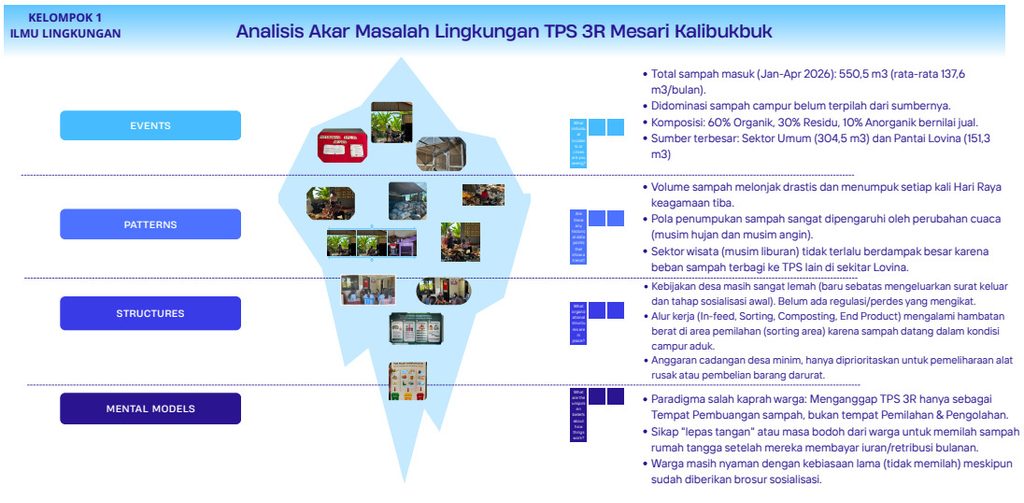
The observation began with a direct assessment of waste management activities at TPS 3R Mesari Kalibukbuk. The group examined the waste collection, sorting, and processing systems while observing several operational challenges encountered in the field. Among the issues identified were the increasing volume of waste, limitations in supporting facilities, and the fact that waste separation at the household level has not yet been implemented consistently.
Rather than viewing these conditions solely as isolated events, the analysis was extended to identify recurring patterns and the underlying structures that influence them. The discussion revealed that community awareness regarding waste segregation remains relatively low, while the effectiveness of waste management is also influenced by institutional support, operational systems, and the availability of adequate infrastructure. These findings indicate that environmental problems cannot be addressed only at the technical level but also require attention to social and organizational dimensions.
Formulating Sustainable Solutions
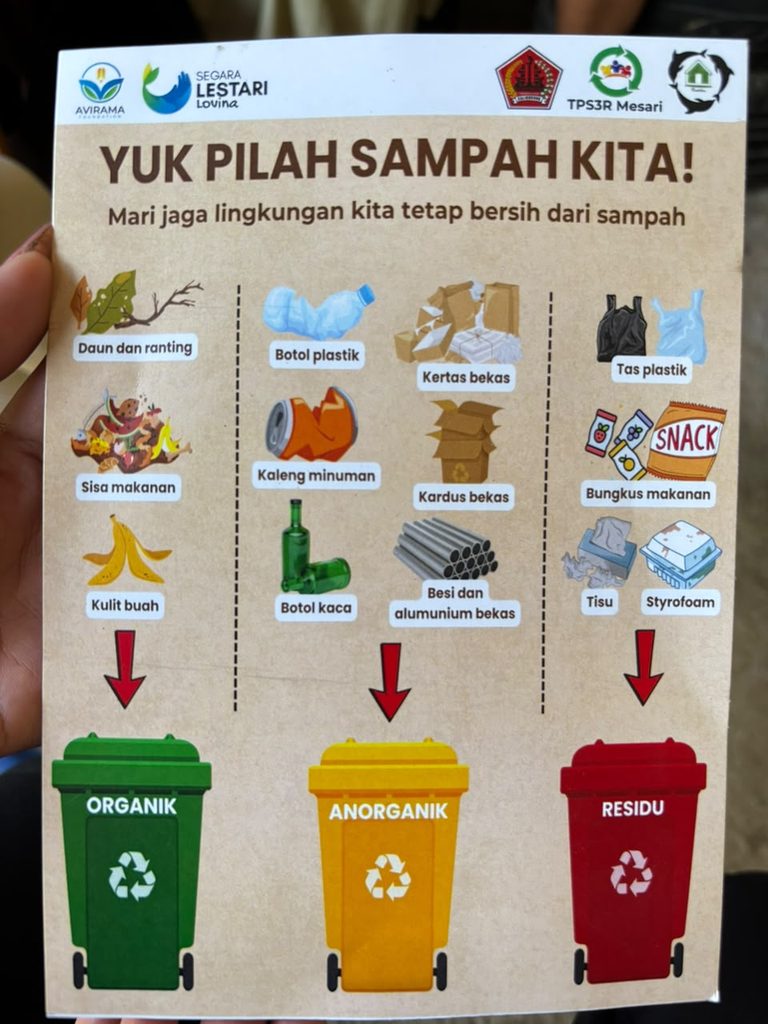
Based on the analysis, the group proposed several recommendations to strengthen the implementation of waste management at TPS 3R Mesari Kalibukbuk. One of the primary recommendations is the enhancement of environmental education to encourage waste segregation at the source. Such efforts are expected to reduce the burden on waste processing facilities while increasing the potential for recycling and resource recovery.
The group also emphasized the importance of improving supporting facilities, strengthening coordination among stakeholders, and promoting active community participation. Sustainable waste management requires collaboration between local governments, TPS managers, educational institutions, and the surrounding community. Through collective responsibility, environmental management can be implemented more effectively and consistently.
Learning Through Field Observation
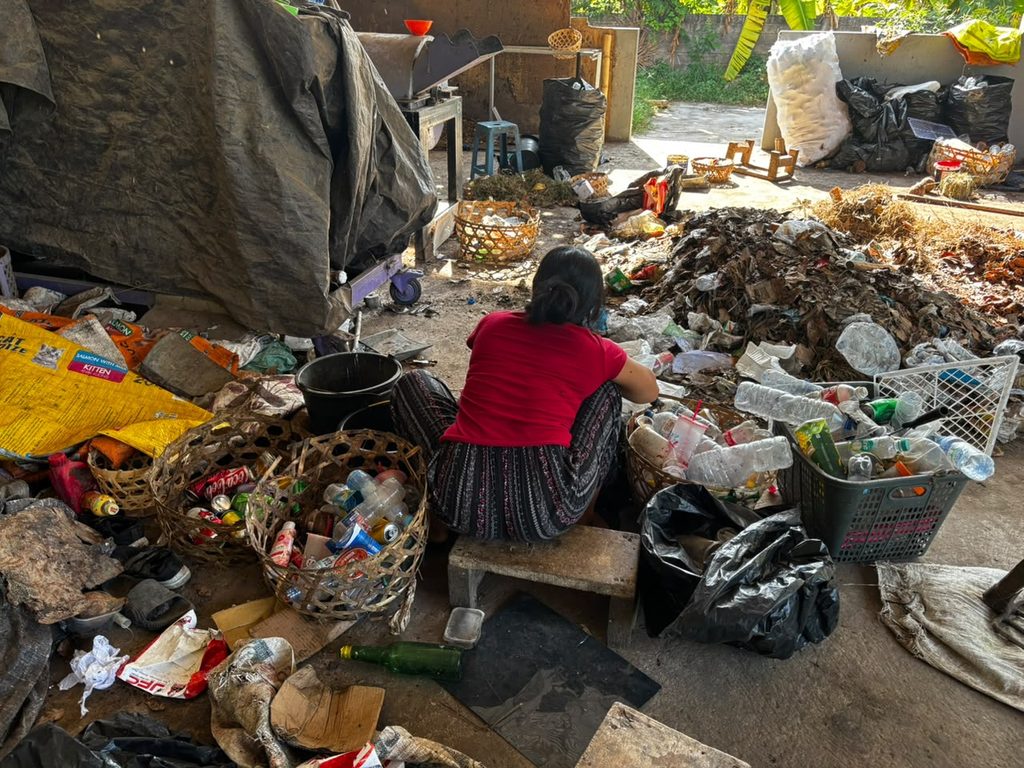
The field visit provided valuable opportunities for the group to connect theoretical concepts with real-world environmental issues. Discussions with TPS managers enriched participants’ understanding of the operational challenges faced in daily waste management and highlighted the importance of integrating technical solutions with community engagement. Applying the Iceberg Model also encouraged participants to examine environmental issues from a broader perspective. Instead of focusing only on visible problems, the analysis considered the recurring patterns, organizational structures, and underlying mindsets that shape environmental practices within the community.
Documenting the Learning Experience
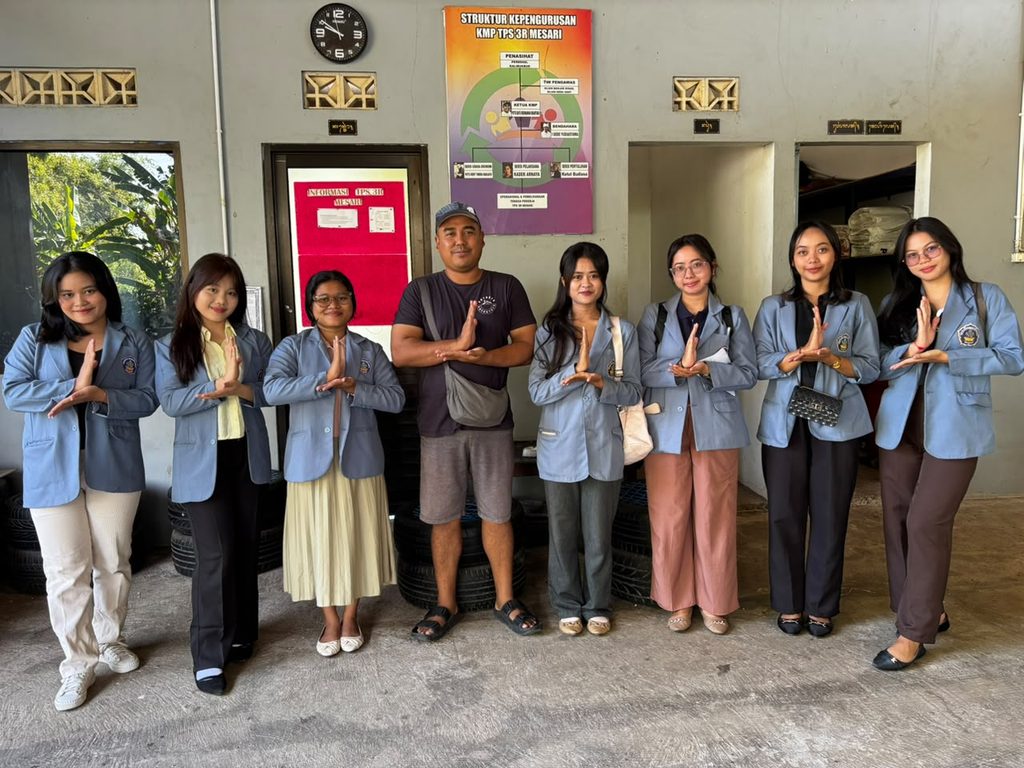
The activity concluded with a presentation of the group’s analysis and proposed solutions, followed by a documentation session with the management of TPS 3R Mesari Kalibukbuk. The documentation captured the observation process, discussions, and collaborative learning experiences throughout the visit. Through this activity, Ni Wayan Putri Juniantari Dewi, Komang Cantika Mahadewi Tanaya, Kharisma Finola Br. Milala, Nurpita Sari Br. Sitepu, Olivia Teresia Sitinjak, Ni Kadek Ayu Riska Praditadewi, and Ni Komang Tyarini gained a broader understanding of the complexity of environmental management. The experience reinforced the idea that sustainable waste management depends not only on infrastructure and technology but also on education, collaboration, and long-term commitment from all stakeholders.
Article Contributor: Ni Wayan Putri Juniantari Dewi, Komang Cantika Mahadewi Tanaya, Kharisma Finola Br. Milala, Nurpita Sari Br. Sitepu, Olivia Teresia Sitinjak, Ni Kadek Ayu Riska Praditadewi, and Ni Komang Tyarini